
How to Play Salsa on the Piano for Beginners starting with the musical fundamentals
How to Play Salsa on the Piano for Beginners It is one of the most accessible ways to get started in Latin music, even without any prior knowledge. Although salsa may seem like a complex style due to its energy, speed, and rhythmic richness, it is actually built on repetitive patterns and highly organized structures that can be learned step by step with the right methodology.
The piano plays a dual role in salsa: on the one hand, it provides harmony, and on the other, it acts as a rhythmic element within the band. This means that the pianist doesn’t just “accompany,” but is part of the musical driving force of the song. That’s why, How to Play Salsa on the Piano for Beginners It's not about memorizing songs, but about understanding how rhythm, time signature, and the interaction between instruments work.
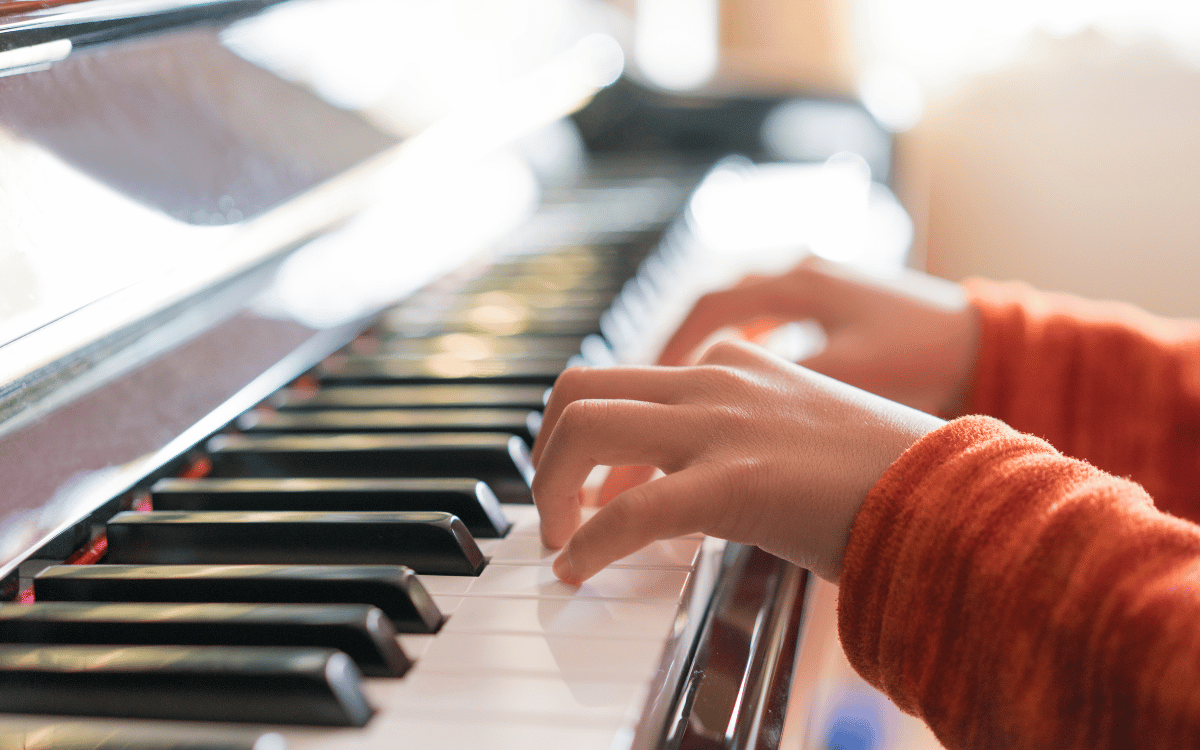
In this approach, learning is not based solely on traditional music reading. In fact, one of the first shifts in mindset that students must make is to stop thinking of the piano as something linear and start perceiving it as a rhythmic system. From this perspective, How to Play Salsa on the Piano for Beginners It involves developing a good ear, coordination, and a sense of groove right from the very first lessons.
First Steps to Learning How to Play Salsa on the Piano for Beginners
To make proper progress in How to Play Salsa on the Piano for Beginners, the first step is to familiarize yourself with the keyboard and the basic chords used in salsa. Most progressions are built around triads and seventh chords, which form the harmonic foundation of the genre. Learning these chord shapes allows you to start playing simple patterns right from the beginning.
The next step is to introduce the concept of rhythm as it applies to the piano. In salsa, rhythm is not a secondary element, but rather the central focus of the performance. Therefore, students should begin by practicing simple patterns with both hands, maintaining a steady beat. At this stage of learning to play salsa on the piano, repetition is key to internalizing the movement.
One of the first patterns students learn is usually the basic montuno. This pattern consists of a sequence of chords repeated rhythmically to match the salsa clave. Although it may seem mechanical at first, consistent practice helps develop stability and coordination.
It's also essential to actively listen to salsa music. It's not just about hearing it, but about analyzing how the piano interacts with the bass and percussion. This habit greatly accelerates the process of How to Play Salsa on the Piano for Beginners, since it helps you internalize the style naturally.
Coordination and Rhythm Development in How to Play Salsa on the Piano
One of the biggest challenges in How to Play Salsa on the Piano for Beginners It is the coordination between both hands. Normally, the left hand provides the harmonic or rhythmic foundation, while the right hand introduces chords, variations, or small syncopations.
This kind of independence requires constant practice. At first, it is normal for students to lose their rhythm or have difficulty maintaining rhythmic stability. However, with repetition, the body begins to perform the movements automatically, and the rhythm becomes more natural.
Another key element is the clave in salsa. The clave is a rhythmic structure that organizes the entire piece of music and determines how the piano patterns fit together. Without understanding it, it is very difficult to play any accompaniment correctly. That is why, How to Play Salsa on the Piano for Beginners It should always include an exploration of the music's inner rhythm.
Furthermore, developing a sense of rhythm depends not only on technical practice, but also on listening. Listening to how the instruments interact within a song helps you understand the piano's true role in salsa.
Practical application of How to Play Salsa on the Piano for Beginners
Once you've mastered the basics, the next step in How to Play Salsa on the Piano for Beginners is to apply them in real musical situations. This means moving from isolated exercises to playing along with simple salsa songs.
Early pieces typically feature repetitive structures and simple harmonic progressions. This allows students to focus on rhythm and coordination without feeling overwhelmed by harmonic complexity. As they progress, variations on the montuno and more dynamic patterns are introduced.
At this stage, the student begins to develop fluency. It is no longer just a matter of playing correctly, but of maintaining the groove and adapting to the tempo of the music. This is a key point in How to Play Salsa on the Piano for Beginners, as it marks the transition from technical study to musical performance.
Over time, the student also begins to introduce small personal variations within the pattern, which opens the door to basic improvisation. This process is natural and is part of the pianist's development within the style.
Musical evolution within How to Play Salsa on the Piano
As learning progresses, How to Play Salsa on the Piano for Beginners It goes beyond being a simple beginner's guide and becomes a solid foundation for musical development. Students begin to understand how the overall structure of a salsa song works.
The piano evolves from a technical instrument into a tool for musical communication. This means that the pianist no longer simply plays patterns, but interacts with the band, responds to changes, and brings energy to the ensemble.
This level of understanding allows students to continue progressing toward more complex concepts such as improvisation, advanced montuno variations, and live accompaniment. All of this stems from a solid foundation built during the early stages of How to Play Salsa on the Piano for Beginners.
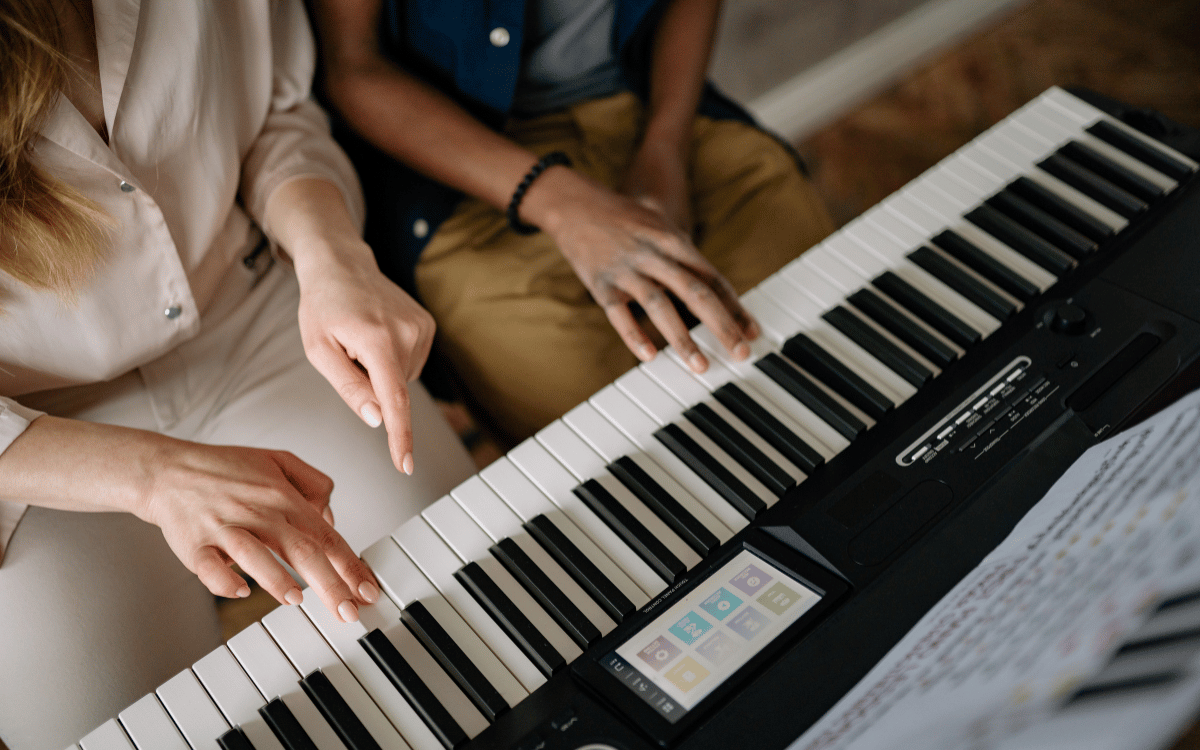
Conclusion
The process of How to Play Salsa on the Piano for Beginners It is progressive, accessible, and deeply musical. It does not require any prior experience, but it does require perseverance, active listening, and regular practice.
As students progress, the piano ceases to be a technical challenge and becomes a form of expression within salsa. With the right teaching method, anyone can develop the skills needed to play fluently and enjoy the style from a solid foundation.
