
Learn to Play Salsa on the Piano based on the musical foundation of the style
Learn to Play Salsa on the Piano It involves delving into a musical language in which rhythm, harmony, and the interaction between instruments carry equal weight. It is not a style that can be approached solely through reading sheet music or traditional classical technique, but rather through an understanding of the groove and the Afro-Caribbean rhythmic structure that underpins the entire genre.
The piano plays a central role in a salsa band. It is not a secondary instrument, but rather an element that connects the percussion, the bass, and the vocals. That is why, Learn to play salsa on the piano It means understanding how musical movement is built within a song and how the piano contributes to that constant flow of energy.
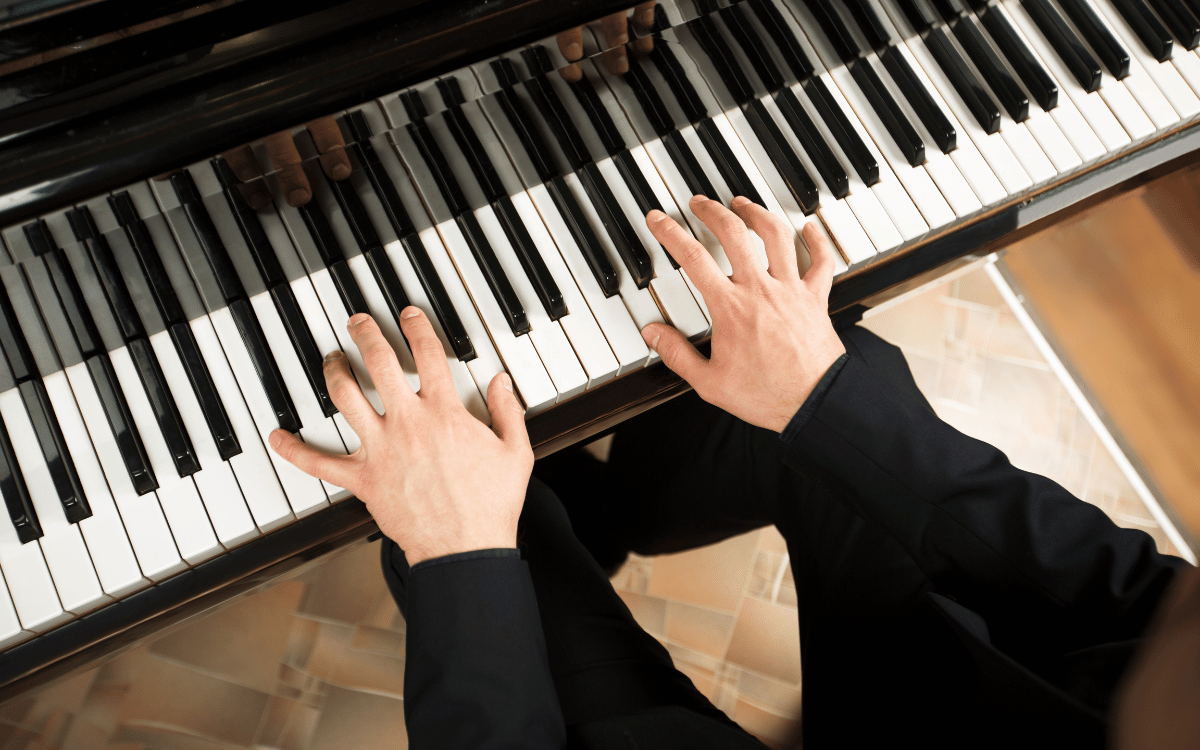
From the very beginning, students must change the way they think about the instrument. Instead of viewing the piano as a sequence of notes, they should perceive it as a rhythmic system. This shift in perspective is essential for developing a solid foundation in the style and avoiding common beginner mistakes.
The role of the montuno in learn to play the piano
One of the most important factors in Learn to play salsa on the piano It's the montuno. This repetitive pattern is at the heart of salsa accompaniment and one of the most commonly used techniques by pianists in the genre.
Montuno is based on the repetition of rhythmically organized chords that fit within the salsa clave. Although its structure may seem simple, performing it requires coordination, stability, and a highly developed sense of timing.
When a student begins to Learn to play salsa on the piano, the montuno is often one of the first real challenges. Not only because of the coordination required between the hands, but also because of the need to maintain a steady rhythm for long periods without losing the beat.
Furthermore, the montuno is not static. Throughout a song, it can vary in intensity, dynamics, and complexity. The pianist must adapt to these changes in real time, which makes this pattern a highly versatile musical tool.
Rhythm, Key, and Coordination in Learn to play salsa on the piano
To make progress in Learn to play salsa on the piano, it is essential to understand the key. The key is a rhythmic structure that organizes all salsa music and determines how the piano patterns fit into the whole.
Without this foundation, it is very difficult to play accompaniments correctly. That is why studying rhythm is one of the fundamental pillars of learning. A pianist must be able to feel the pulse of the music, not just count it.
Coordination between both hands is another essential aspect. In most salsa patterns, one hand maintains the rhythmic foundation while the other introduces chords, syncopations, or variations. This independent playing is one of the most important aspects of Learn to play salsa on the piano.
Repetition is key in this process. Through constant practice, the body internalizes the movements, and the rhythm becomes more natural. Over time, the student stops thinking about each note and begins to play fluidly.
Active Listening and Musicality in learn to play the piano
An aspect that is often underestimated in the Learn to play salsa on the piano It's active listening. It's not enough to just practice technical exercises; you need to listen to a lot of salsa music to understand how the piano works in a real band.
Listening allows you to identify patterns, recognize structures, and understand how the instruments interact. The bass sets the harmonic foundation, the percussion defines the rhythm, and the piano connects these two elements through the montuno.
This type of auditory learning accelerates musical development, as it helps students internalize the style naturally. Students begin to anticipate changes and recognize patterns without needing to analyze them theoretically.
Improvisation and Evolution Within Learn to play salsa on the piano
As the student progresses in Learn to play salsa on the piano, there comes a point when patterns cease to be mere exercises and become creative tools. This is where improvisation begins.
Improvising in salsa doesn't mean playing freely without rules, but rather creating variations within a clear structure. The pianist must stay in key, maintain the groove, and, at the same time, contribute their own musical ideas.
This balance between structure and creativity is what defines the intermediate and advanced levels of salsa piano. The montuno ceases to be a mechanical repetition and becomes an expressive language.
Practical application of learn to play the piano
Once the student has mastered the fundamentals of Learn to play salsa on the piano, you can start applying them to complete songs and real musical contexts.
At this point, the piano ceases to be a technical exercise and becomes a functional instrument within a band. The musician is able to accompany, improvise, and adapt to different musical situations.
This step is essential, as it connects theoretical learning with the real-life experience of playing music in a group.
Conclusion
The process of Learn to play salsa on the piano It is progressive, in-depth, and based on an understanding of rhythm rather than mere technique. It requires perseverance, active listening, and structured practice.
As you progress, the piano ceases to be an isolated instrument and becomes a living element within salsa music. Mastering this language opens the door to a rich, dynamic musical world full of expressive possibilities.
